Application
Manual spraying, automatic guns, reciprocators or robot painting.
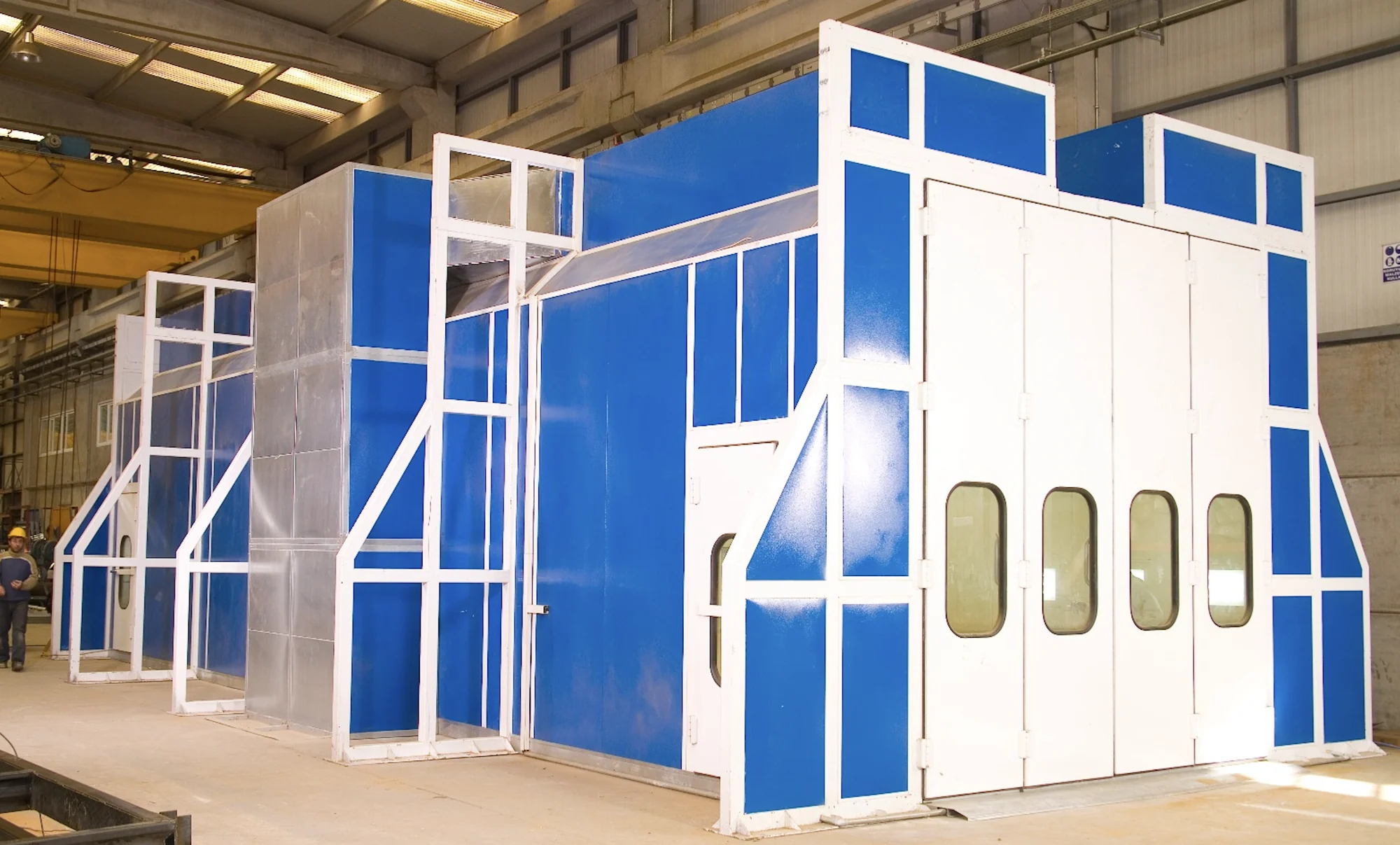
Built around your dimensions.
Railway carriages, oversized components and wind turbine sections. Discover booths built around your dimensions.
Explore custom spray boothsIndustrial wet paint booths use overspray separation selected for the coating, application method and production load, including paper filter and water curtain configurations.
Request a project proposal ↗Engineered around overspray
Part geometry, paint consumption, solids content, application efficiency and production hours determine how overspray should be captured and removed.
We engineer dry-filter, water-curtain and venturi systems for manual or robotic application, together with air handling, controls and sludge management.
A wet paint booth with paper filters and a water curtain spray booth separate overspray in different ways. Compare the systems below using paint consumption, coating type and maintenance requirements, so the filtration method matches your production.
Manual spraying, automatic guns, reciprocators or robot painting.
Dry filtration, water curtain or high-efficiency venturi separation.
Air handling, conveyors, flash-off, ovens, controls and safety interfaces.
System types
The separation technology is selected from the coating process and required production stability—not from a fixed booth model.
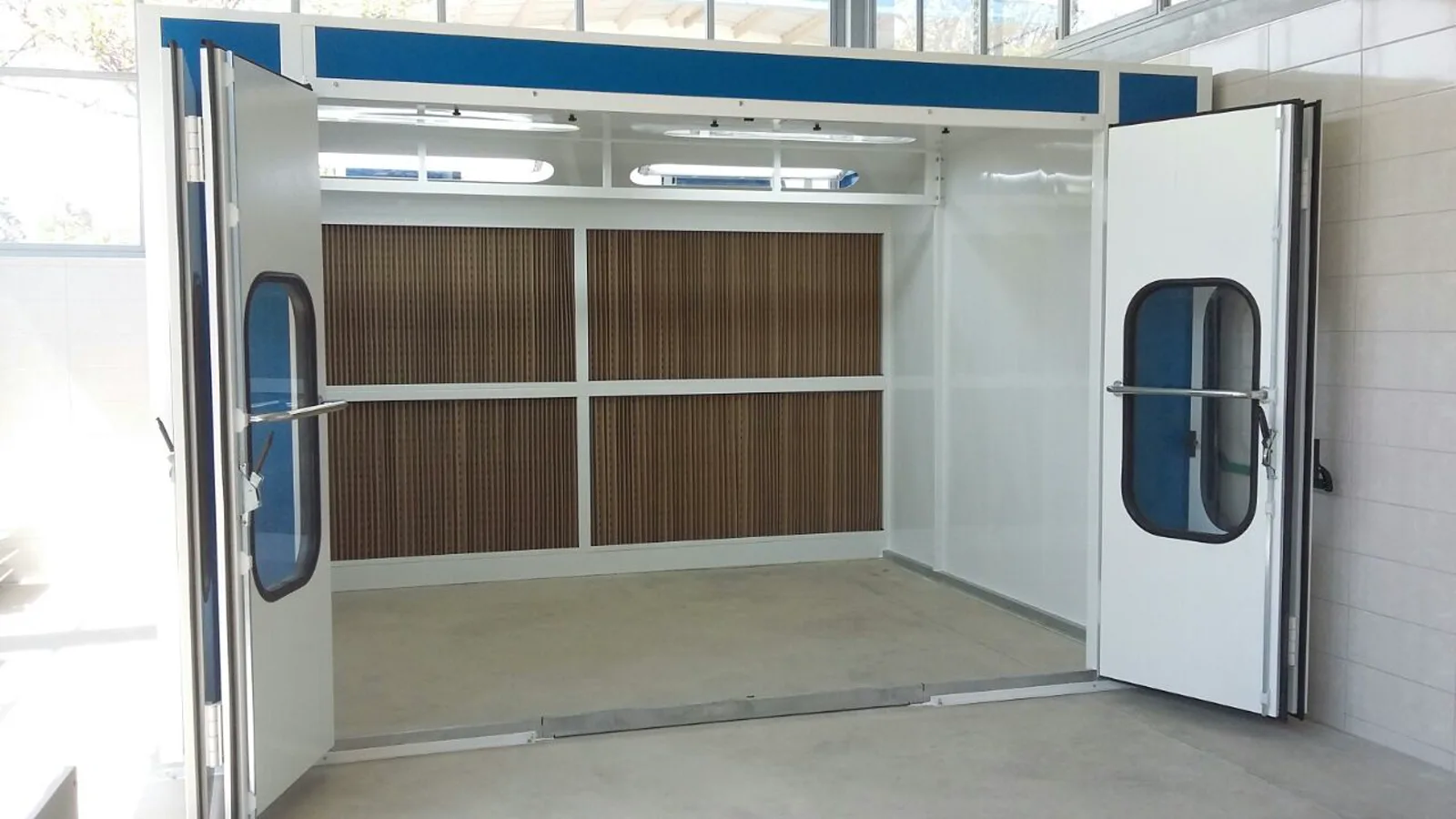
Overspray is captured by staged disposable filter media positioned in the extraction wall or floor. A simple, efficient solution where paint loading and filter-change intervals are compatible with production.
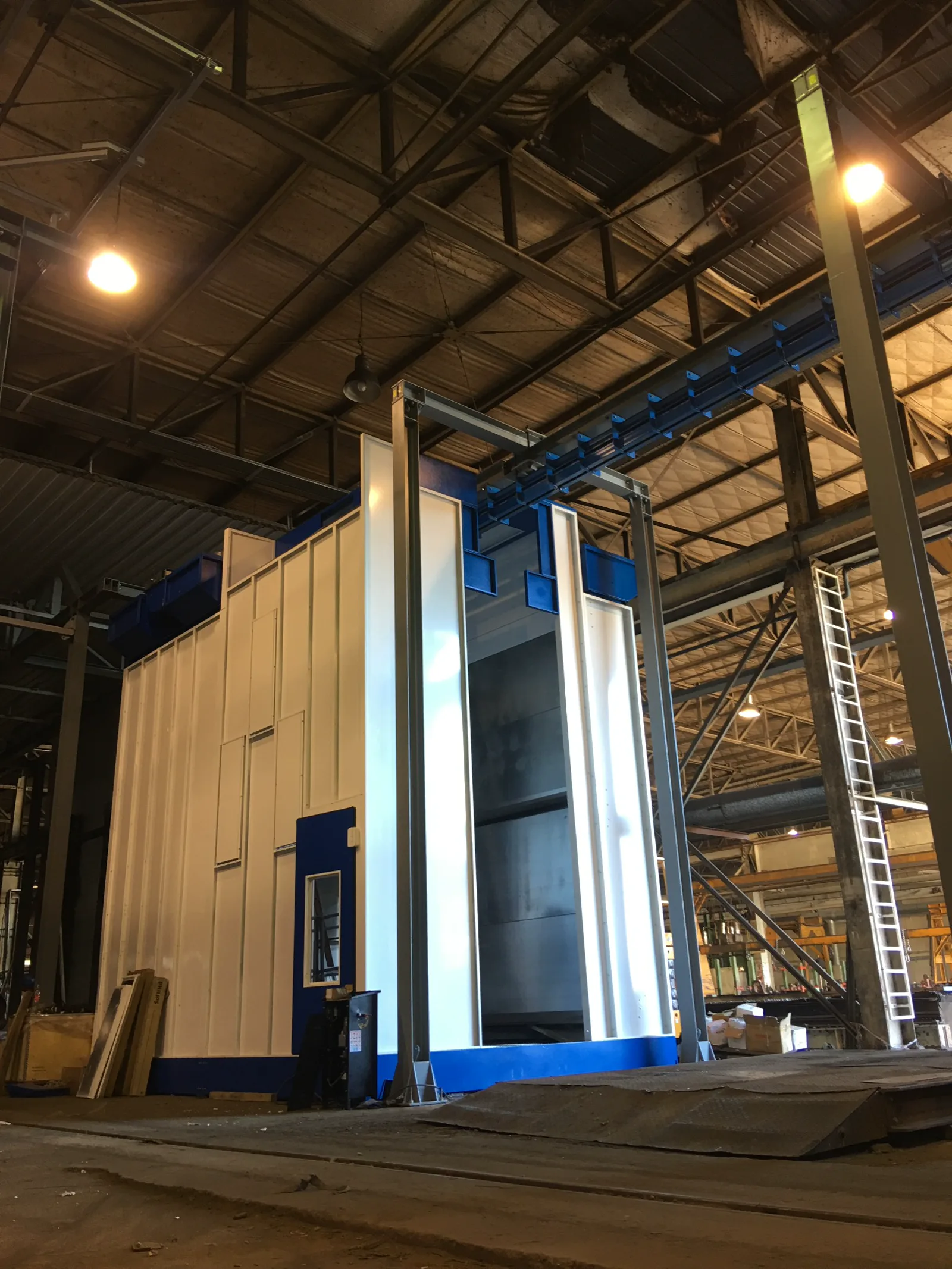
A continuous water curtain captures overspray at the extraction wall. Circulated water carries paint solids to the collection section for treatment and removal.
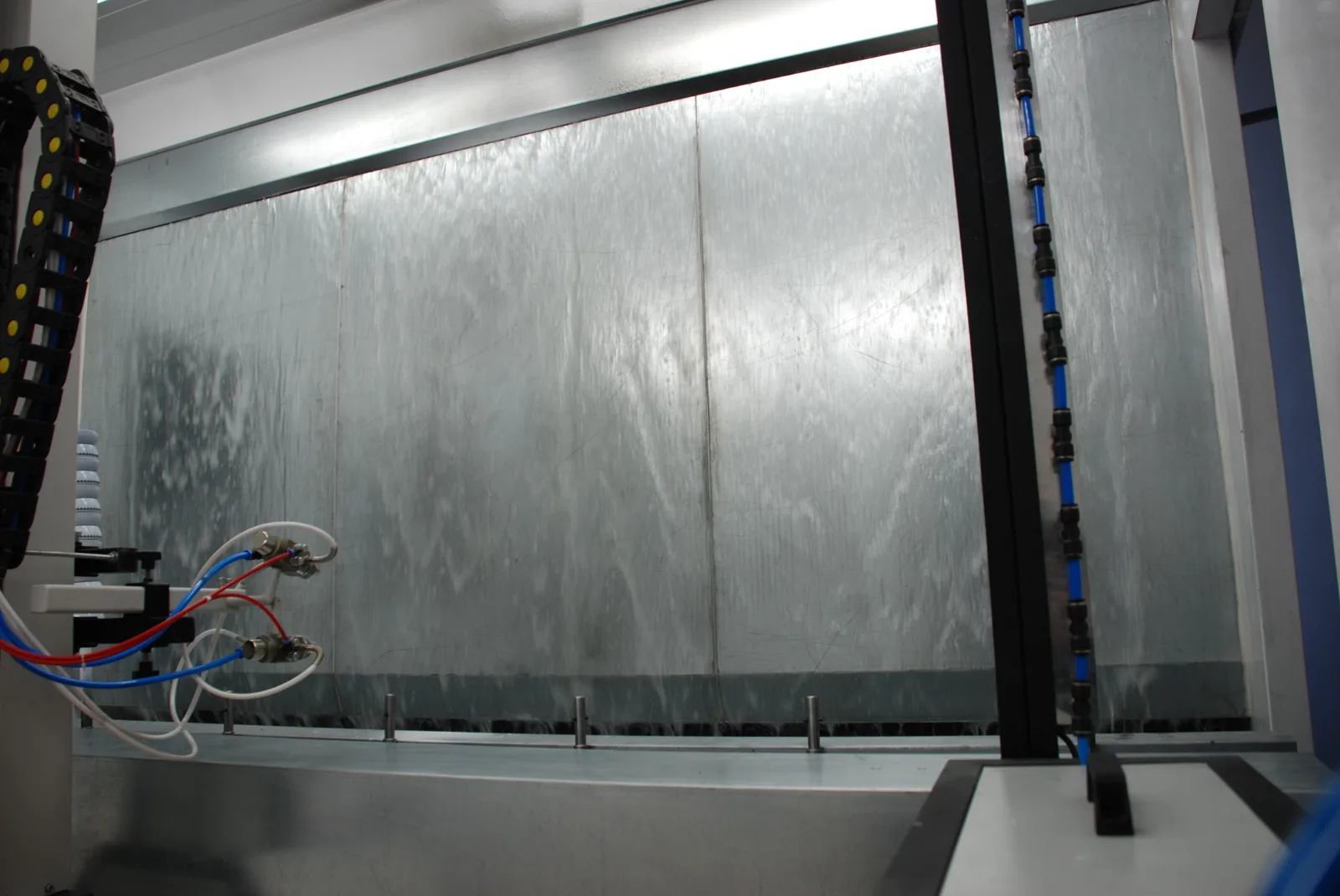
Air and water accelerate through a venturi throat, creating intensive mixing that transfers overspray particles into the circulating water. Mist eliminators then separate water droplets from the exhaust air.
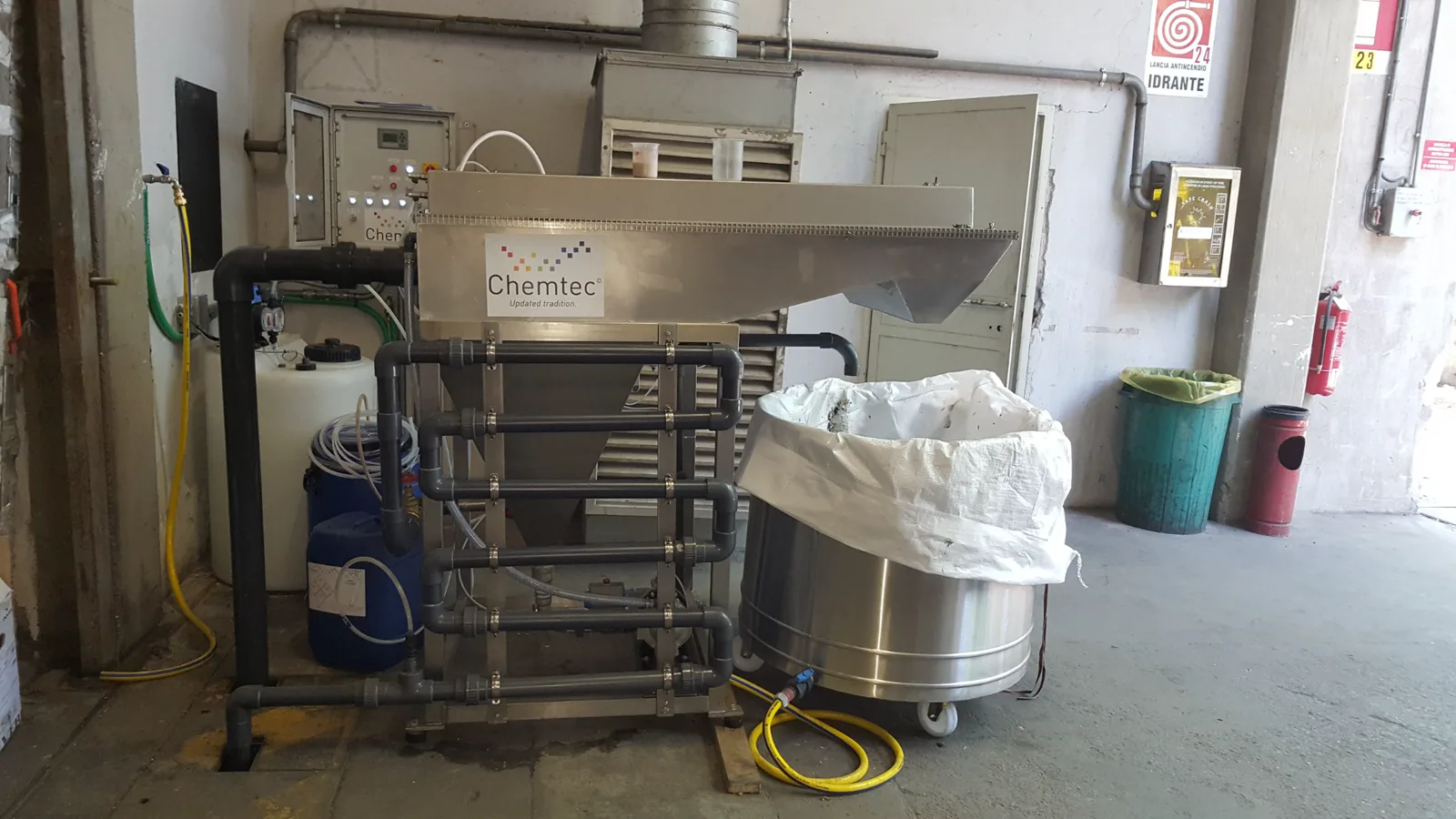
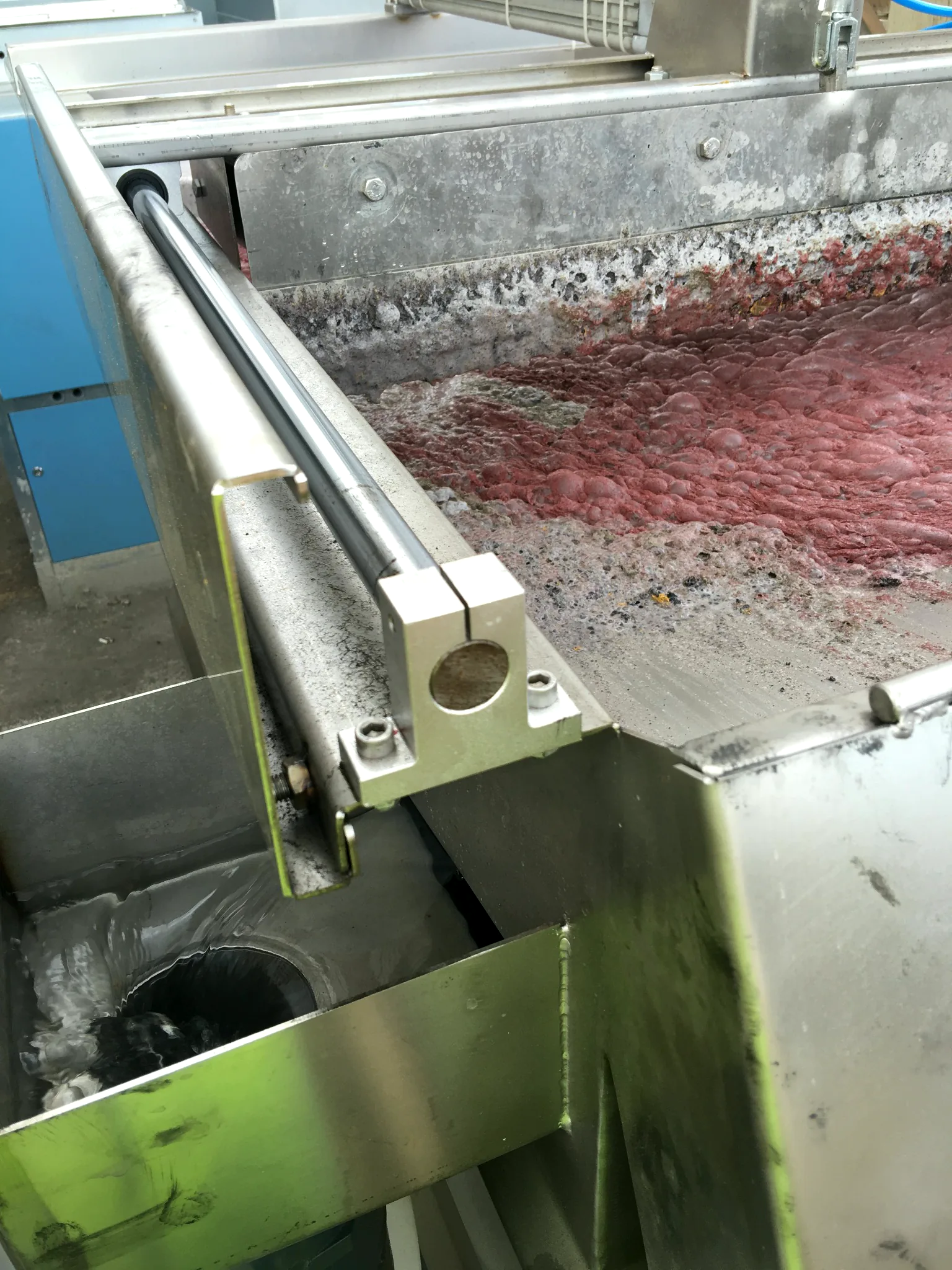
Water-based booths can be equipped with dedicated treatment systems that separate coagulated paint sludge from the circulating water and support more stable booth operation.
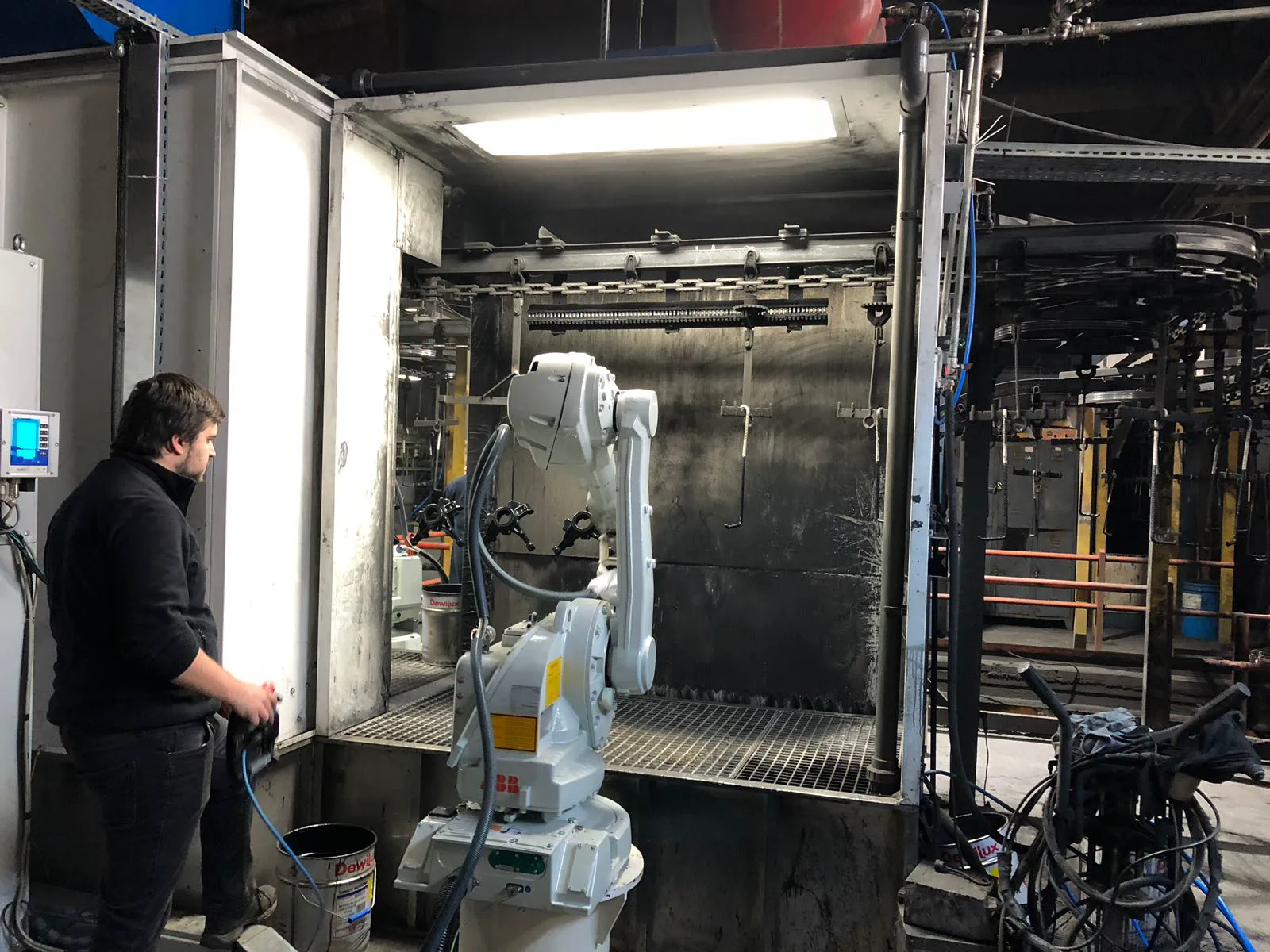
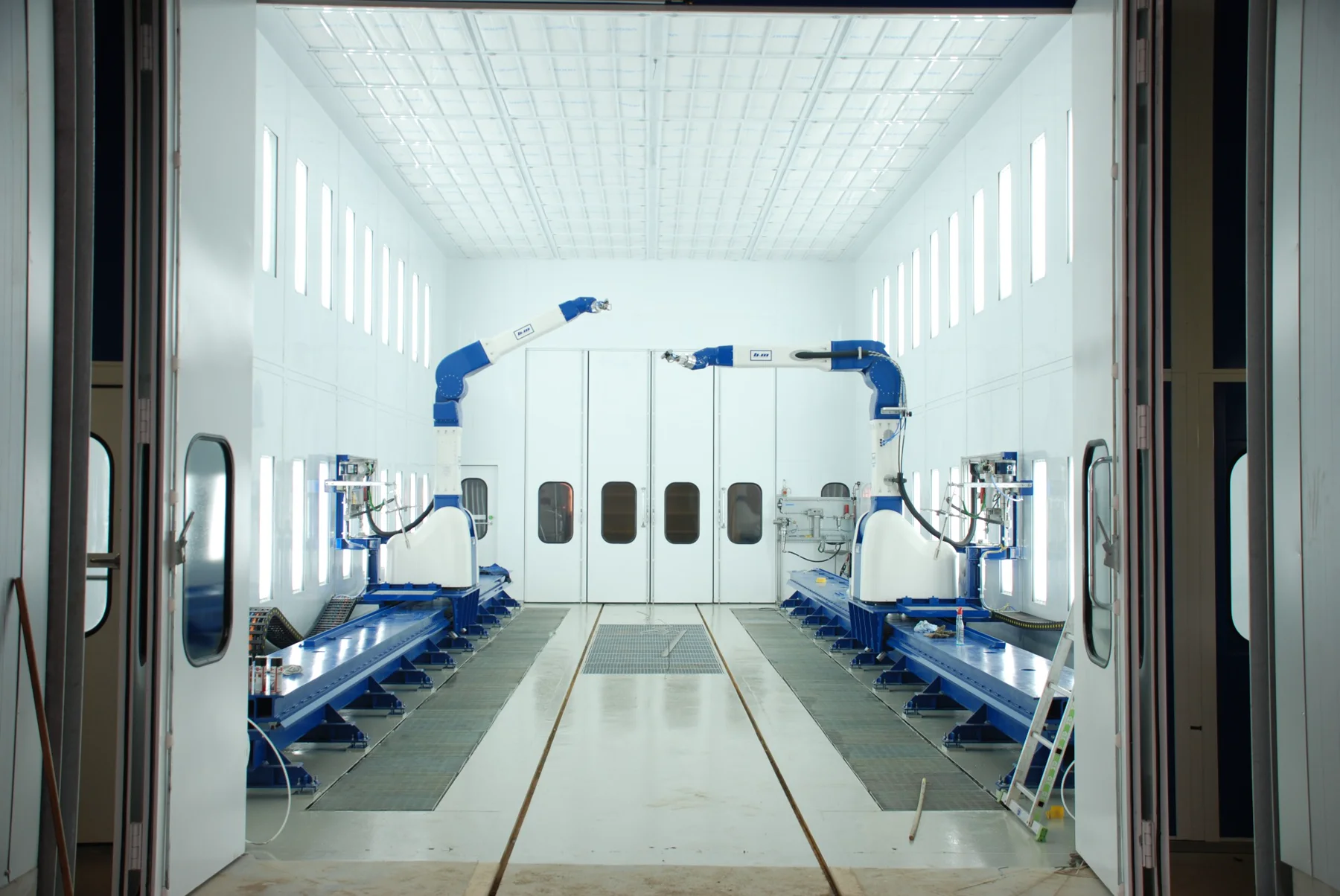
Robot cells combine controlled airflow, overspray separation, part handling and application equipment within one coordinated safety and automation concept.
Engineering inputs
Part dimensions, weight, hanging method, hourly capacity and available cycle time.
Coating type, consumption, solids, colour changes, application method and transfer efficiency.
Building layout, exhaust routes, heating source, electrical capacity, water and wastewater requirements.
Related systems
Related installation
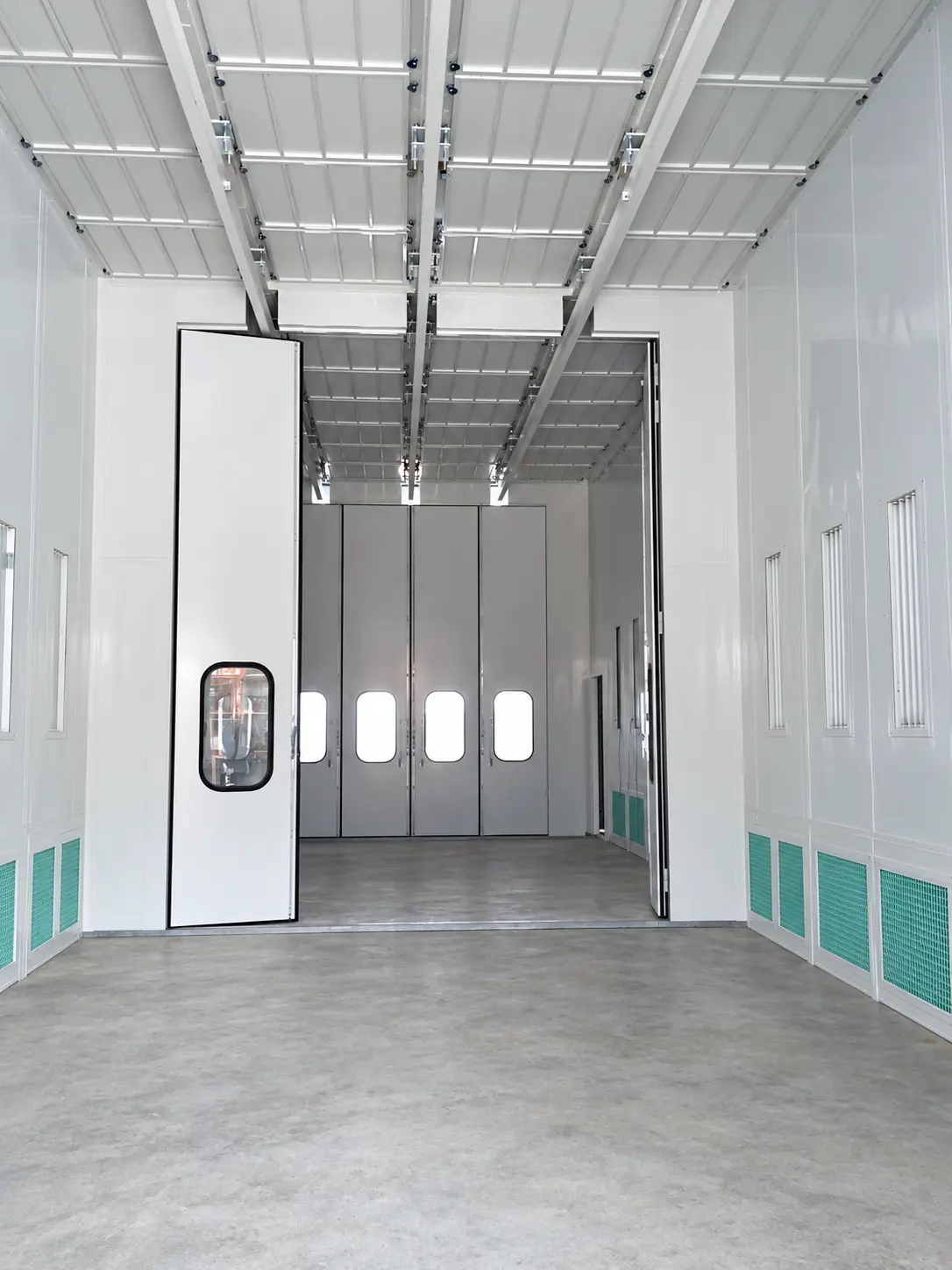
Explore the installed system, its configuration and project photographs.
View project ↗